no kings | christ the king
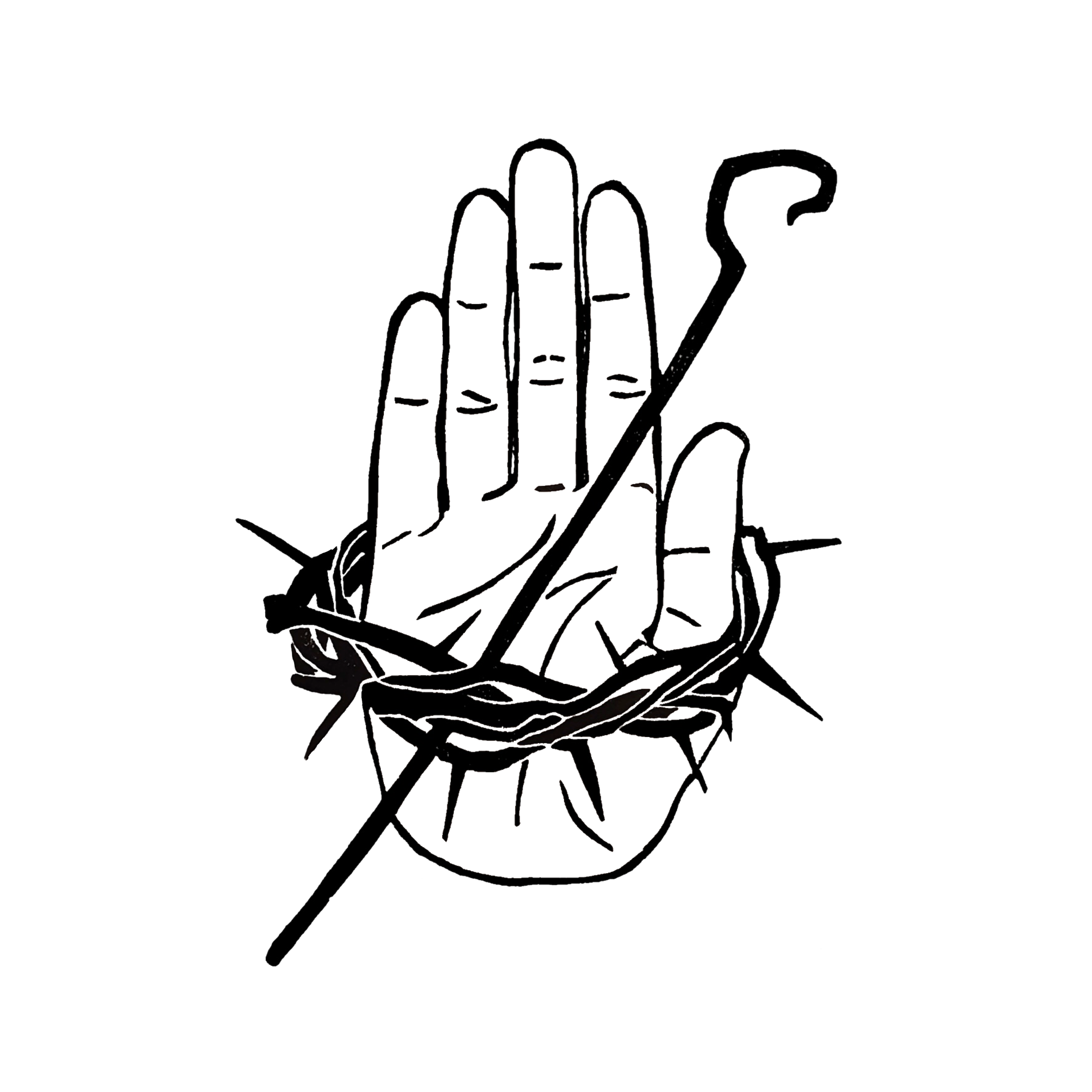
a sermon preached at St. Martin in-the-Fields Episcopal Church, 11/23/2025
Today is Christ the King Sunday. Actually, its official name is: Solemnity of Our Lord Jesus Christ, King of the Universe. Which is a kind of a mouthful, so we’ll stick with Christ the King. It’s not one of the most popular feasts in the church calendar. We celebrate it the last Sunday before Advent every year, and it usually gets lost in the shuffle of preparing for Advent. We need to make sure the Advent wreath isn’t too wobbly, and do we have the purple altar linens ready?
We’re excited for Advent, my personal favorite season in the church year, so it’s easy to skip over this day. So what’s with this feast day, Christ the King?
If we aren’t careful, the name of this feast day could lead us quickly into trouble. You might, in fact, be nervous - doesn’t Christ the King sound suspiciously like a growing rhetoric in our own country that equates Jesus with a certain kind of government?
When we say - Christ is King - are we saying we want a “Christian nation?” Are we falling in line with a rising sentiment that only a certain kind of Christian, one who believes in forcibly displaying the 10 commandments in public schools and bows before a “Christian flag” should be in power?
These are important questions we should be asking. In our current historical moment. When clearly non-Christian ideals are being signed into policy in the name of God, what does it mean to proclaim Christ as King?
As many gathered at protests just last month and peacefully proclaimed - No Kings! - should we be calling Christ a King? Especially when Christ himself refused the title of king?

I imagine many of us are struggling with what it means to call ourselves Christians right now, when a subculture of Christianity seems to have taken over public discourse. A pastor calls empathy a sin, and I want to shout - I’m not that kind of pastor! The president sells signed copies of the Bible, and the name of God is invoked when instituting policies that hurt people and I want to shout - I’m not that kind of Christian! Christ the King sounds like it fits right in with a toxic worldview. So why do we celebrate it?
Well, most of the feast days in our church calendar are old. Like, really old. Like the day to commemorate All Saints Day was set in the year 609.
But Christ the King is new. It’s only 100 years old.
In fact, it’s exactly 100 years old. In the year 1925, Pope Pius the Eleventh instituted this feast day. It was instituted to counter the rise of fascism and zealous nationalism rising in Europe.
Isn’t that interesting?
This year, 2025, marks 100 years that the church has observed this holy feast of resistance to challenge the dangerous tide that uses the name of God to grasp political power.
This feast day in our tradition has a word for the world today. There is no king but Christ, no politician ordained by God, no true power but the self-giving, self-sacrificing power of Jesus.
Our gospel reading today may have been a bit jarring. This Good Friday reading sounds out of place as we prepare for Advent and Christmas, as we prepare for the Christ child to be born. But that terrible day on the hill outside of Jerusalem is the answer to - what kind of king is Jesus?
Jesus’s kingship is not about violently overthrowing those in power in order to take power for himself. Jesus’s kingship is not about demanding loyalty, asking people to pledge allegiance to him as a way to determine who is in and who is out. Jesus’s kingship is so profoundly non-violent that he dies at the hands of the empire in order to overcome death, in order to expose the futility of authoritarian rulers who crush the weak.
“If you are the king of the Jews, save yourself!” shout the soldiers at the foot of the cross. Any king they knew would demand his followers to free him, to fight the enemy on his behalf. They must not have been the same soldiers in the garden of Gethsemane, when Peter attempted to fight off Jesus’s captors. They must not have been there when Jesus rebuked him, saying - “Put away your sword.”
They could not imagine any true king who would give up power, even to the point of giving up his life; and so they made a sign that said King of the Jews and placed it over him. Some king you are, they thought. Who would pledge allegiance to you, if you can’t even save yourself?
But for those who had been with Jesus, those who had listened to his teachings and seen the way he interacted with people - they would come to realize that this was the kind of leader he had been all along. A leader who spends time with the marginalized and the outcasts, instead of rubbing elbows with the rich and powerful at dinner parties. A leader who never demanded anyone stay with him, but only invited. He never condemned anyone who turned away. A leader who didn’t ride into the city on a magnificent war horse, but entered Jerusalem riding on a female donkey, welcomed not by powerful people but by regular folks who cut down palm branches and used them as makeshift flags.
Do you see how Jesus’s very being, his very way of moving about the world, showed the hypocrisy of those in power? He upended every expectation, and invited people into a kingdom. Not a kingdom with borders to defend and enemies to conquer, but a kingdom nonetheless.
“The kingdom of heaven is already among you,” Jesus told the Pharisees when they demanded details about this kingdom. Don’t you see? It is within you. Yes, Christ is king of this kingdom, but a king unlike any we’ve ever seen. Christ is King of the kingdom of heaven simply because Christ himself is Love, is Justice, is Peace.
The kings of this world demand you to prove whether you deserve help buying food. Christ the king takes five loaves of bread and two fish and gives it away to a crowd of five thousand without concern for whether they could afford lunch that day or not.
Of course, after the feeding of the five thousand that day, the crowd realizes what has happened - a miracle. Let’s make him king! they say amongst themselves. And Jesus knows people. He knows that that lunch on the hillside was the kingdom of God, was the kingdom of heaven taking place in hunks of bread and flaky fish passed between friends and strangers.
And, he knows that the people won’t get it - they will see that miracle and think they need to turn him into the kind of king they understand, the kind of king they want to pledge allegiance to and follow into battle against their enemies. He knows they will miss the point. Jesus knows they want to make him be their king, and so what does he do that day? He runs away and hides on a mountainside.
Reminds me a bit of our patron saint, Martin - when he realized they wanted to make him be bishop, did he gleefully take up the power of that office? No - he ran away and hid in a barn.
Jesus’s power is subversive, and gentle, and vulnerable. It is everything we don’t want our political leaders to be. And, it is the only true, lasting power.
As the Reverend Lizzie McManus-Dail wrote, “Jesus was a king who lampooned the powers of this world by tending to the people most burned by that power. He was a king who knew that true peace is not made by suppression, but by the long and steady and gentle and frustrating work of reconciliation.”
And so the feast of Christ the King is actually a day to recall the kind of kingdom we are called to live into, the kingdom of heaven - one defined not by political power or money or prestige, but a kingdom defined by the inherent dignity of every human being, and by our responsibility to steward the earth. Today is a day which was actually invented in order to disrupt the idea of a “Christian Nation.” It was instituted to present a different vision - one that rejects nationalism and fascism and exposes them for the lies they truly are.
Today we must ask - what kind of king is Christ? Does the kingdom of Christ rule in my heart? In what ways am I being called to further participate in this kingdom of justice, equity, and peace?
Church, we have a word for the world today. Jesus has a word for the world today. If you ever think your faith has become irrelevant, or you wonder why we would bother to keep reading the Bible, take heart - remember Christ the King Sunday.
100 years after the institution of Christ the King Sunday. How much have we learned as a society? What is our call in this moment, as followers of Christ, as we watch the rise of fascism and Christian nationalism in our nation?
No king but Christ, the one who centered women and radically shared power; the one who commended the poor and condemned the rich; the one that became one of the oppressed to show God’s identification with the oppressed; the one whose commitment to Love for the world led him to the cross on Good Friday. Any ruler or policy or system that crushes the poor, the immigrant, the sick - it is not of Christ, no matter what Bible verse they take out of context to defend it.
No king but Jesus, the baby born to an unwed mother, whose family fled political persecution and were refugees in Egypt. That is the king we’re preparing to receive this Advent. An inside-out, upside-down kingdom that exists within our very hearts, a kingdom led by a ruler whose name is Emmanuel, God with Us.
